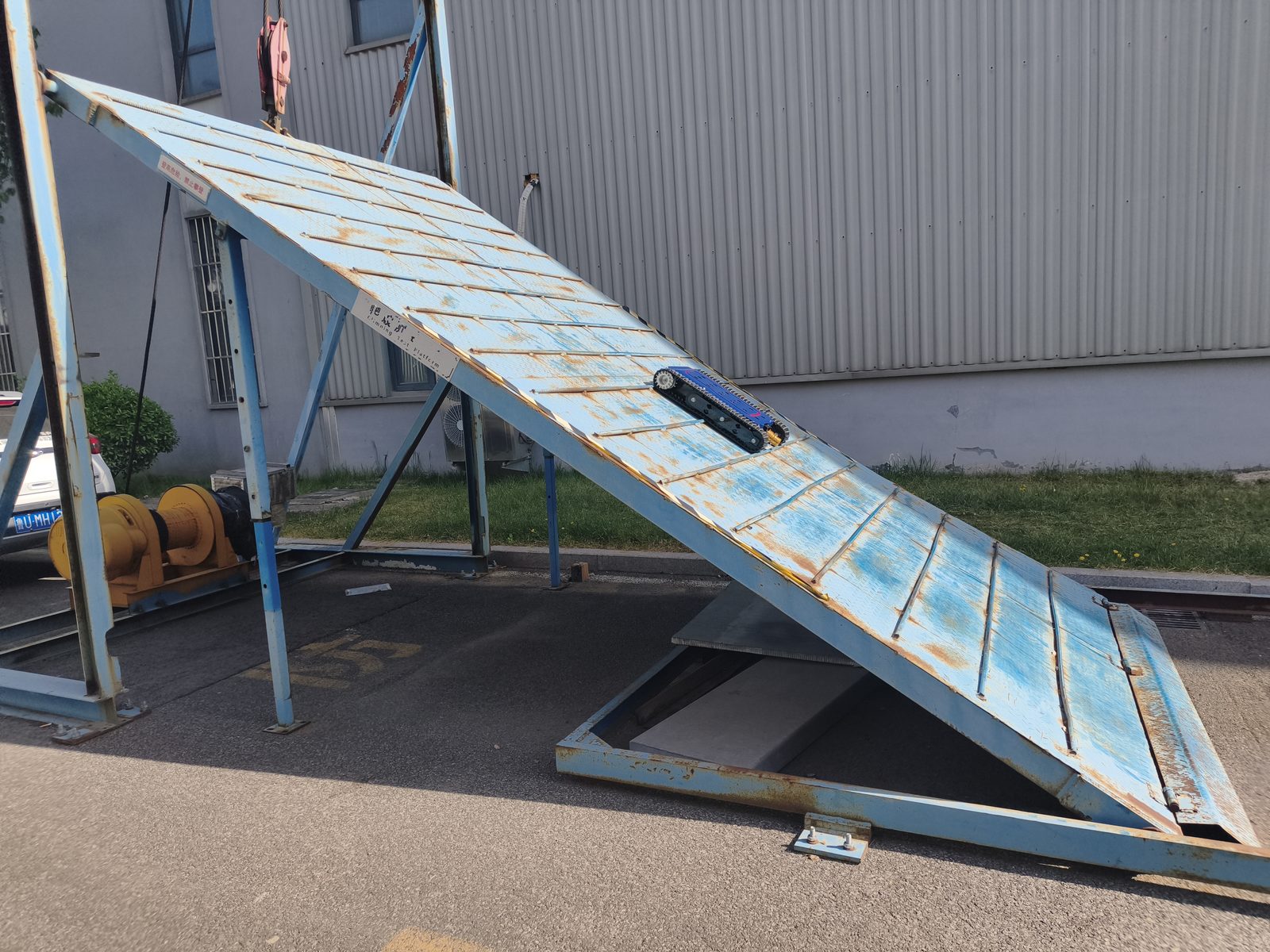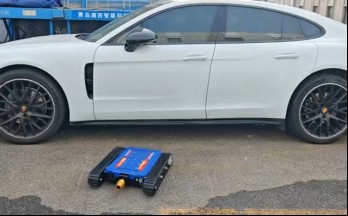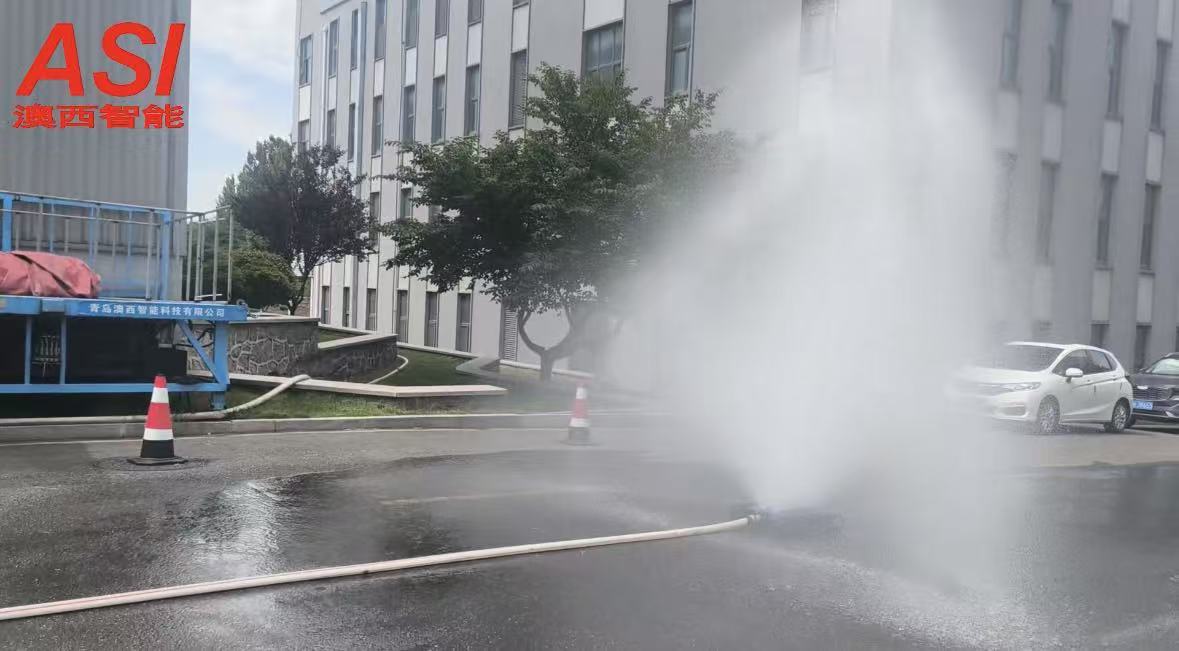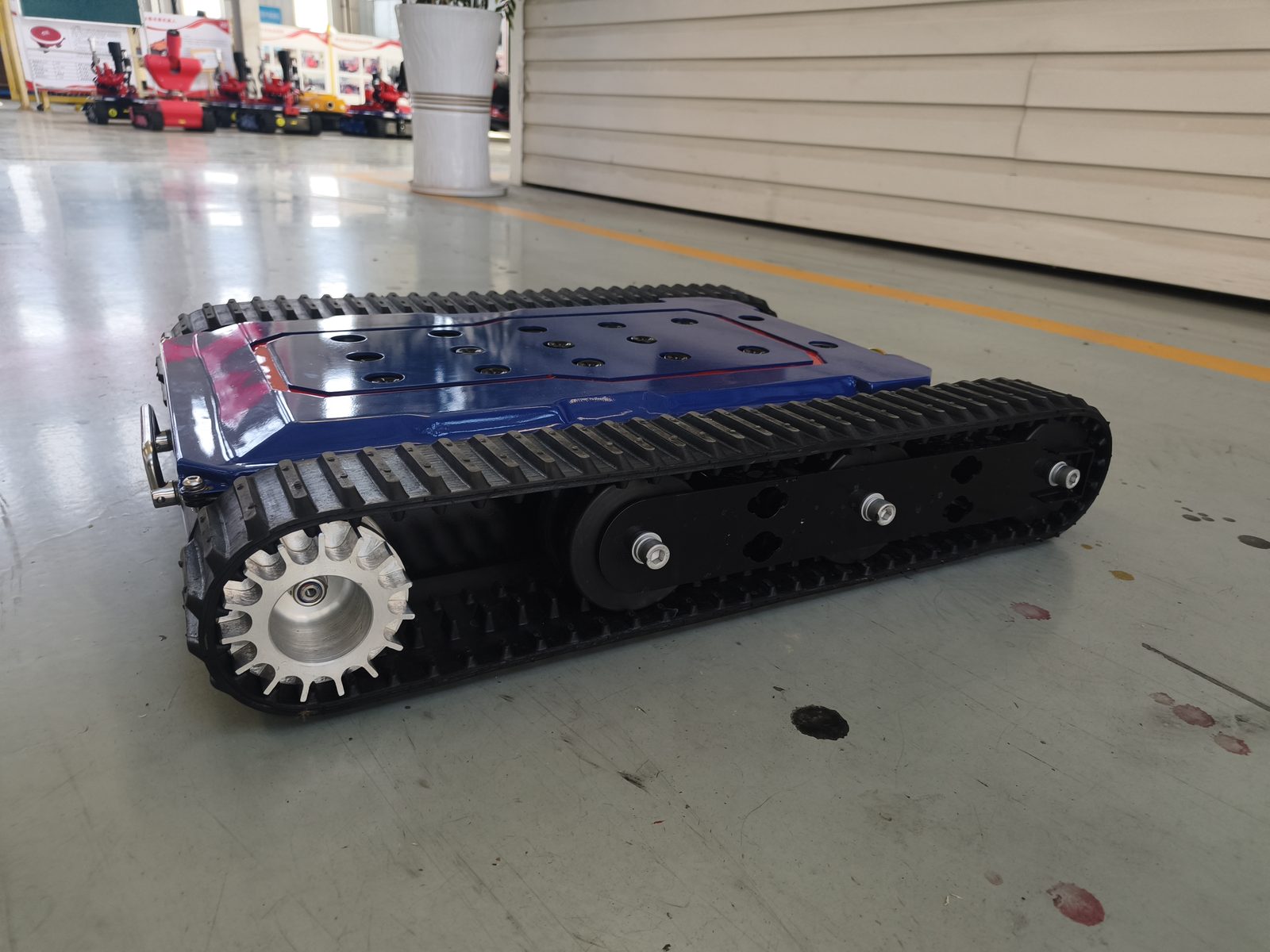
This robot is a dedicated firefighting unit developed for new-energy vehicle fire incidents, targeting power-battery fire scenarios for precise and intelligent suppression. Equipped with multiple high-pressure fine-mist nozzles, it delivers sustained, full-coverage cooling to the lithium battery area underneath electric vehicles, rapidly suppressing thermal runaway and extinguishing flames. Its low profile fits below standard vehicle chassis, allowing it to enter the underbody of almost all new-energy models — sedans, SUVs, buses, trucks and electric vehicles. It replaces firefighters in high-temperature, toxic and explosive environments for unmanned precision response.
| Dimensions | ≤660 × 500 × 120 mm |
|---|---|
| Weight | ≤40 kg |
| Travel speed | ≥1.2 m/s |
| Straight-line deviation | ≤0.12% |
| Climbing ability | ≥70% |
| Obstacle height | ≥40 mm |
| Lateral stability angle | ≥35° |
| Towing capacity | ≥2 charged DN40 hoses |
| Remote control | ≥500 m |
| Full-load operating time | ≥3 h |
| Max flow rate | ≥5 L/s |
| Working pressure | 0.3–0.8 MPa (or direct hydrant supply) |
| Spray coverage | 1–4 m² |
| Max spray angle | ≤120° |
| Nozzle quantity | ≥14 |
| Self-protection | Self-protection spray system to cool the robot in fire scenes |
| Control system | 2.4G FHSS, stable signal |
| Remote distance | ≥500 m |
| Remote weight | <500 g, lightweight design |
| Remote ergonomics | Carbon-fiber textured shell, ergonomic grip |
Detailed specifications are available on request. Contact our sales team for the full datasheet.
Ultra-low profile fits below standard vehicle chassis to directly reach the battery fire core area.
Multiple high-pressure fine-mist nozzles provide sustained full-coverage cooling of lithium batteries.
≤40 kg and compact size, liftable by one person with strong mobility.
Long-range remote control with simple operation reduces misoperation and workload.
Stored in fire truck compartments for fast arrival at the rescue scene.
Replaces firefighters in high-temperature, toxic and explosive environments for precision response.