
As emergency rescue tasks grow increasingly complex, firefighting robots replace and reinforce human rescue forces. They make fire rescue more scientific and efficient while reducing the threat to firefighters' lives. Unafraid of high temperatures and flames, these robots enter high-risk environments filled with dense smoke, toxic gas leaks, explosions or collapses on behalf of firefighters to carry out fire suppression, reconnaissance and smoke extraction — shortening response times, raising efficiency and providing reliable technical support for command decisions and fire safety. By function, AOXI firefighting robots mainly include smoke-exhaust firefighting robots, explosion-proof reconnaissance firefighting robots, reconnaissance & detection robots and firefighting drones.
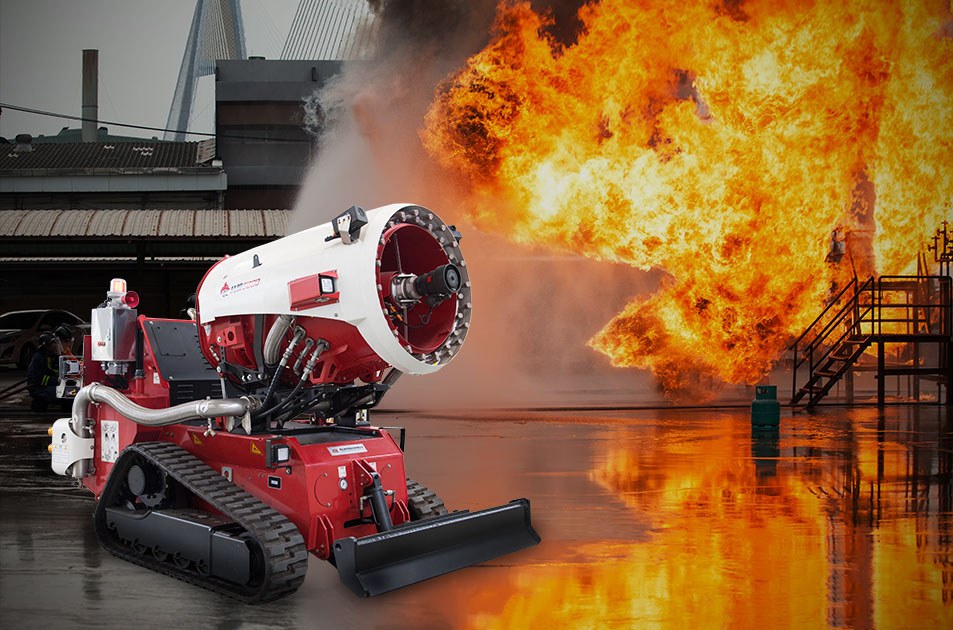
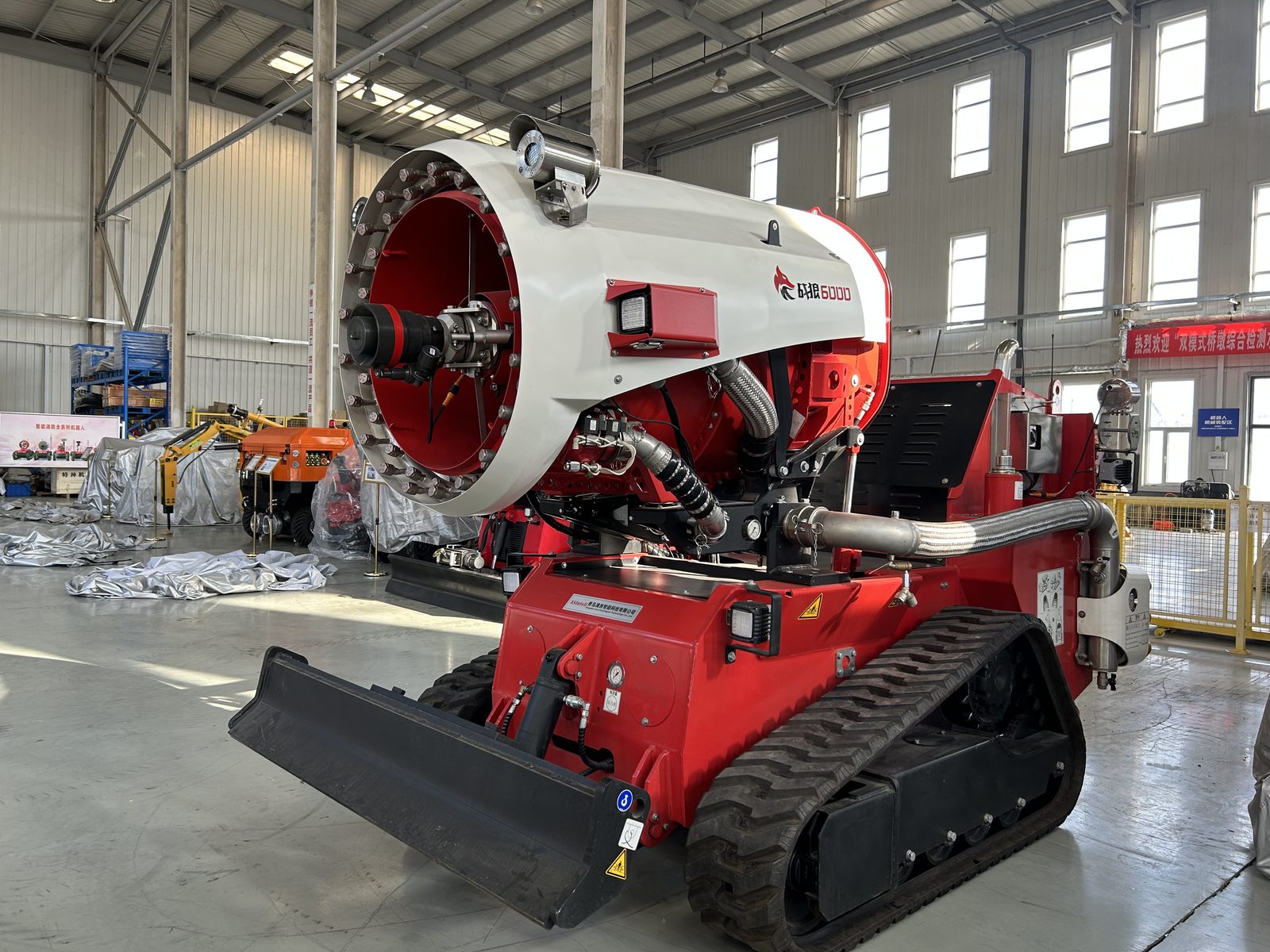
Composed of a robot body, fire monitor, smoke-exhaust unit and handheld remote terminal. Equipped with a high-flow fire water cannon with long range, flexible control and easy deployment, it suits large-span, large-space chemical parks and warehouses, serving petrochemical, biopharmaceutical, power and transportation industries.
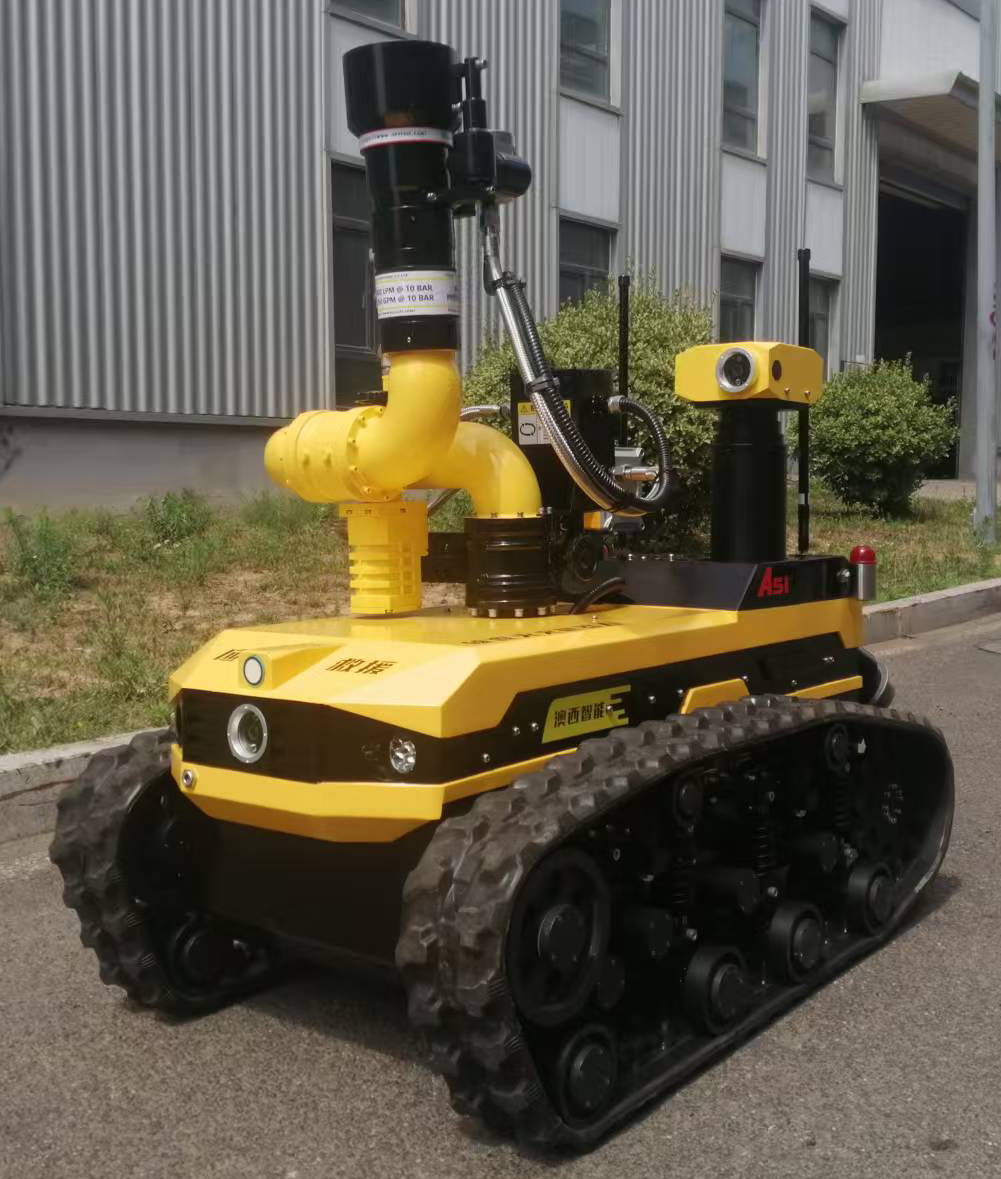
With a compact design, it can pass through ordinary doorways and enter narrow passages, offering high mobility and strong obstacle-crossing capability, able to climb stairs or 30° slopes. It is especially suited to rescue-site reconnaissance, hazardous gas monitoring, and real-time transmission of on-site image and data to analyze and predict potential disaster threats.
Explosion-proof by design and compliant with ground-level IIB hazardous explosion environments, it provides obstacle crossing, fire-source reconnaissance, environment and gas monitoring, and fire suppression & cooling. It is widely applicable to petrochemical plants, hazardous-material warehouses, cargo ports and other flammable and explosive petrochemical and gas environments, greatly improving rescue effectiveness and reducing risk.
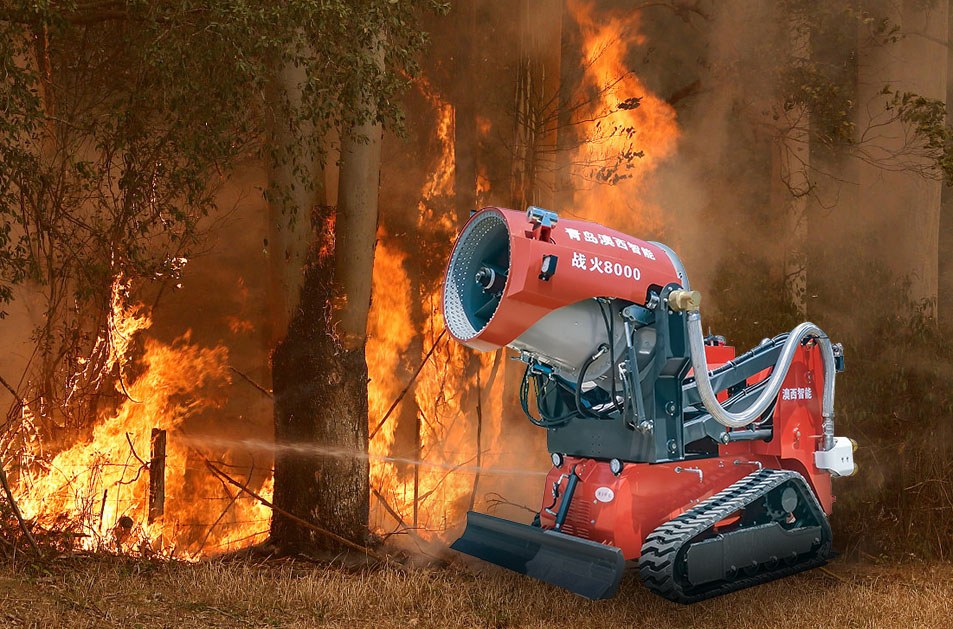
As a key scenario of smart fire protection, building a forest fire prevention system that integrates new technology with existing monitoring and early-warning infrastructure is central to modernizing forest fire governance. Once an incident occurs, the fire type evolves from a steady surface fire to a high-intensity surface fire and crown fire, forming a three-dimensional ground-and-air combustion situation that complicates suppression. Firefighting robots enable coordinated air-ground operations to extinguish, monitor, warn against and control forest and grassland fires, and can link in real time with smart fire analysis and command systems to build a "one-point warning, multi-point linkage, multi-level sharing and joint command" early-warning and emergency-command system — achieving full ground-air coverage of forest fire monitoring and comprehensively raising the informatization and intelligence of forest fire rescue.
Composed of a robot body, fire monitor, smoke-exhaust unit and handheld remote terminal. Equipped with a high-flow fire water cannon with long range, flexible control and easy deployment, it suits large-span, large-space chemical parks and warehouses, serving petrochemical, biopharmaceutical, power and transportation industries.
In metro and tunnel scenarios, disasters are far harder to control than surface-building incidents, with greater difficulty in suppression and evacuation and higher potential danger. Due to insufficient fresh-air supply in the confined space, incomplete combustion produces large quantities of toxic gases such as carbon monoxide, and difficult heat exchange causes temperatures to rise sharply, triggering earlier "flashover" that poses a grave threat to both trapped people and rescuers. AOXI firefighting robots have unique strengths in reconnaissance, fire suppression, demolition, obstacle clearance and all-terrain reconnaissance. In dense smoke and fog, they replace firefighters crossing the fire zone to analyze critical information — the fire location, trapped-person situation, combustible-material properties, fire-spread paths and fire range — delivering first-hand data for on-site command. They guide rescue personnel quickly into rescue passages to carry out evacuation, interior fire attack and smoke extraction, which is highly significant for improving metro-tunnel rescue efficiency and protecting firefighters' lives.
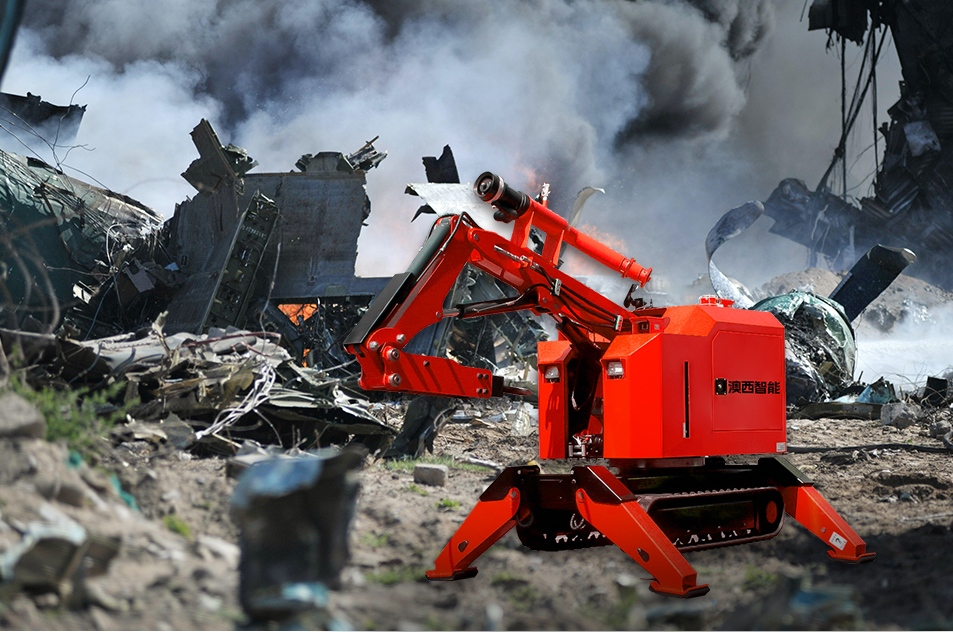
Composed of a robot body, fire monitor, smoke-exhaust unit and handheld remote terminal. Equipped with a high-flow fire water cannon with long range, flexible control and easy deployment, it suits large-span, large-space chemical parks and warehouses, serving petrochemical, biopharmaceutical, power and transportation industries.
Explosion-proof by design and compliant with ground-level IIB hazardous explosion environments, it provides obstacle crossing, fire-source reconnaissance, environment and gas monitoring, and fire suppression & cooling. It is widely applicable to petrochemical plants, hazardous-material warehouses, cargo ports and other flammable and explosive petrochemical and gas environments, greatly improving rescue effectiveness and reducing risk.
A new fire-and-rescue demolition device that integrates demolition, fire suppression and reconnaissance for refined multi-scenario operation. Its front end can quickly mount more than 10 different work attachments — hydraulic hammers, buckets, grapples, hydraulic drills and more — for emergency rescue in earthquakes and building collapses, and for demolition and post-disaster reconstruction of industrial and chemical buildings. Operators control crushing, shearing and removal from multiple directions at long range.
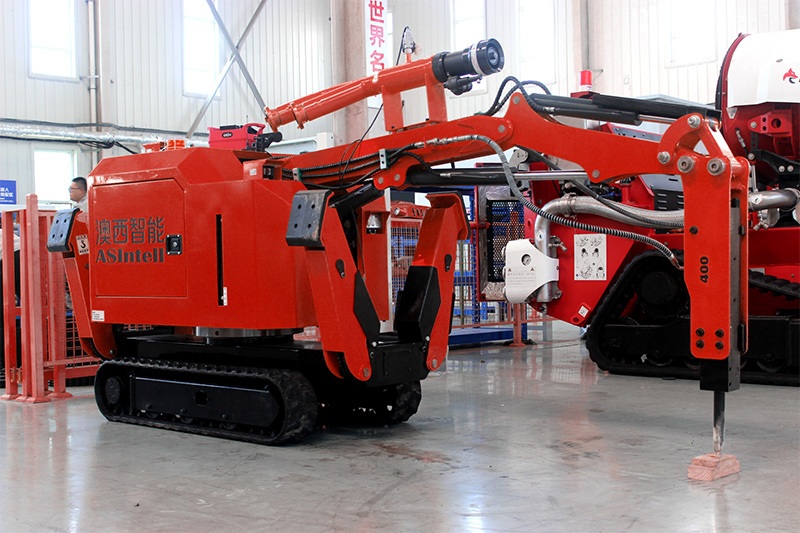
Petrochemical enterprises hold large quantities of flammable and combustible liquids, liquefied combustible gases and combustible solids, with complex production units, crisscrossing pipeline networks and many high-temperature, high-pressure vessels. High heat release and rapid burning mean physical explosions can spread across a very large area within seconds. On-site conditions are complex and changeable, with many hidden hazards and sudden dangers that are hard to approach, making suppression extremely difficult. AOXI explosion-proof firefighting robots provide obstacle crossing, fire-source reconnaissance, environment and gas monitoring, and fire suppression & cooling, with ultra-long-range handheld-terminal control that greatly extends firefighters' operational range and capability. They help cool critical equipment before firefighters enter, eliminate the risk of explosion, and open safe passages for valve shut-off, fire attack and personnel rescue. They are widely suited to petrochemical plants, hazardous-material warehouses and other flammable, explosive petrochemical and gas fire scenarios.
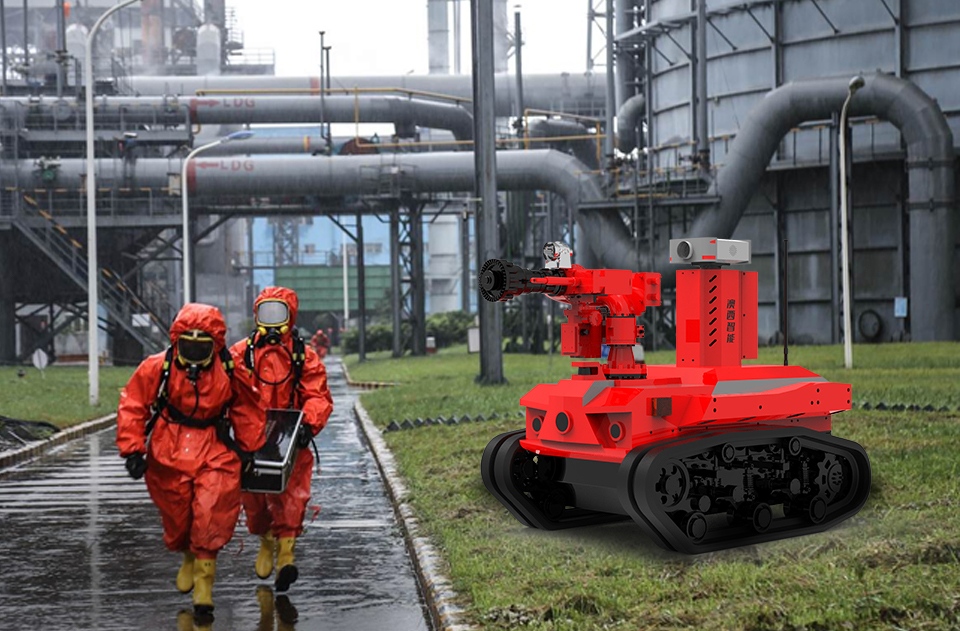
Composed of a robot body, fire monitor, smoke-exhaust unit and handheld remote terminal. Equipped with a high-flow fire water cannon with long range, flexible control and easy deployment, it suits large-span, large-space chemical parks and warehouses, serving petrochemical, biopharmaceutical, power and transportation industries.
Explosion-proof by design and compliant with ground-level IIB hazardous explosion environments, it provides obstacle crossing, fire-source reconnaissance, environment and gas monitoring, and fire suppression & cooling. It is widely applicable to petrochemical plants, hazardous-material warehouses, cargo ports and other flammable and explosive petrochemical and gas environments, greatly improving rescue effectiveness and reducing risk.
With monitoring, surveillance and infrared-sensing capabilities, it is an unmanned device that replaces manual inspection. Through a built-in high-performance processor, it collects, filters and fuses data from on-board sensors to quickly and accurately output the robot's position and surrounding-environment information, build an environment map and perform automatic inspection and navigation. It serves oil, gas and chemical collection stations, transport lines, plants and storage areas in flammable, explosive and toxic environments.
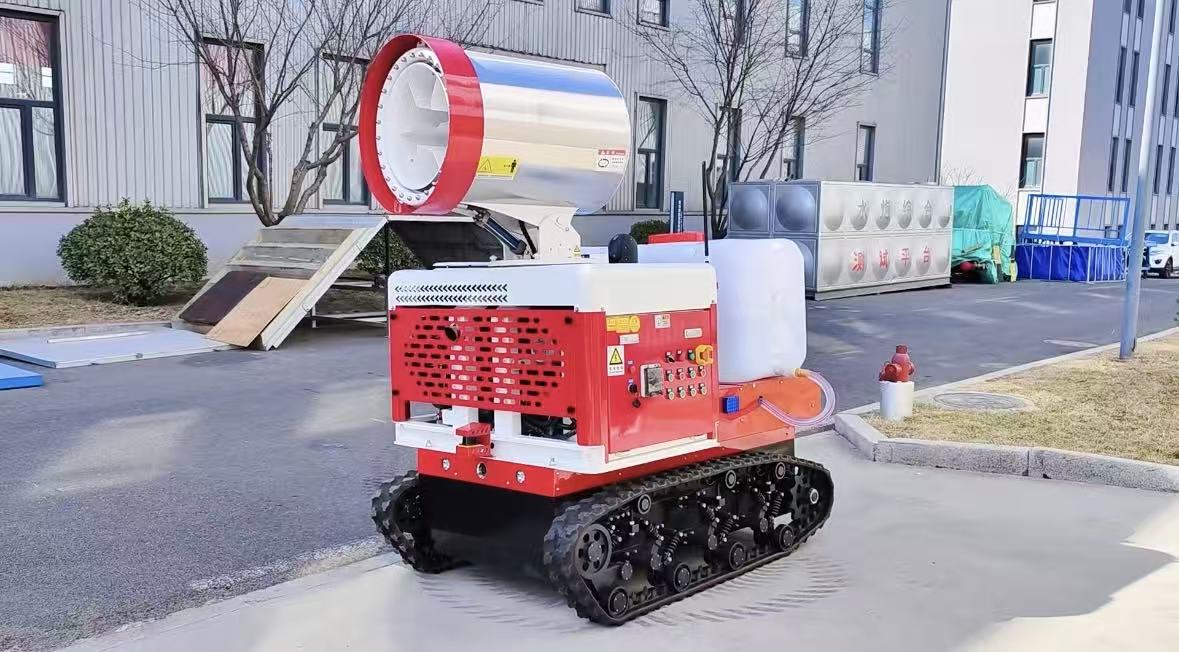
Automated disinfection and cleaning is a key link in infectious-disease prevention and control. Using technology to enhance the full-process protection of post-disaster, port and other scenarios and achieve end-to-end automated disinfection and cleaning not only reduces the danger of manual work but also greatly improves efficiency and automation, contributing to disease prevention. Disinfection robots deliver 360° multi-angle sterilization of the working scene and support remote control for a fully contact-free, automated process — completely eliminating the risk to workers during disinfection and rinsing, a major breakthrough in disease protection.
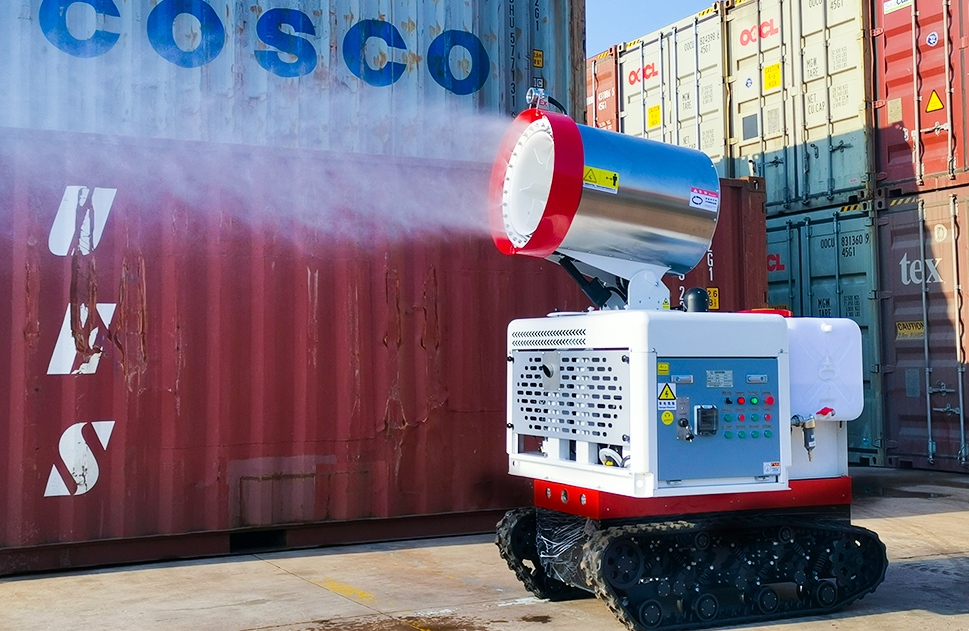
Traditional manual disinfection has obvious drawbacks — low efficiency, difficult quantitative management, instability and health impacts, with workers exposed to the open air and vulnerable to infection. The intelligent wheeled disinfection robot has the ability to perceive, decide and execute tasks autonomously, completing disinfection and sterilization efficiently and stably in post-disaster sites, ports, stations, hospitals, airports, subways, malls, parks, schools and communities.
Tell us your scenario and we will recommend the right robot and configuration.